BEXAR COUNTY, Texas – Tragic news from Bexar County has resonated with families across the region and South Texas.
On Wednesday, the Bexar County Sheriff’s Office confirmed that missing 19-year-old Camila Mendoza Olmos died by suicide.
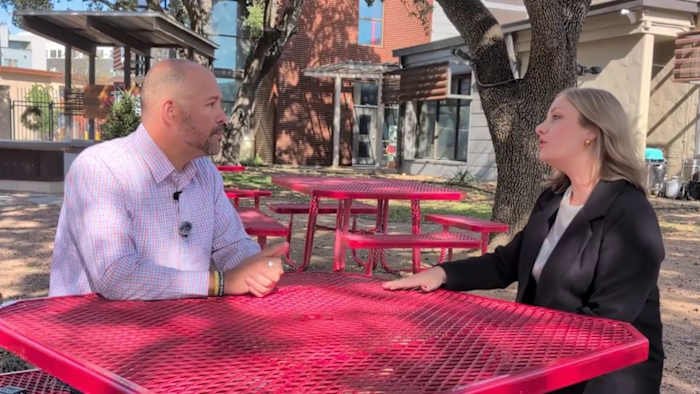
Christian Bove, a San Antonio community leader, said the news hit him hard. He knows that pain all too well.
Bove’s brother, Hector, died by suicide more than five years ago.
“It’s something that completely flips your world upside down. I’m not the same person I was five years ago,” Bove said. “My mom isn’t the same person she was five years ago, my family, his friends.”
The loss has prompted Bove to focus on suicide prevention in his community. His thoughts are now with the Olmos and Mendoza families.
“My heart is broken,” Bove said, pausing through tears. “Any loss of a loved one is heartbreaking, but suicide loss, it just brings the flood of memories back. I think, ‘What could I have done or what would be different if Hector was here today?’”
However, he wants other families to know it is not their fault.
“With Hector, the mental crisis he was in, we had no idea. We did what we could,” Bove said. “Are there signs you can look for? Absolutely. Are there things to do? Absolutely. But this person made the decision.”
Bove now takes any opportunity to share information about suicide prevention.
Through support groups such as SOLOS San Antonio and work with the South Texas chapter of the American Foundation on Suicide Prevention (AFSP), he’s learned what families can do when they know their loved one is struggling.
“Be direct with them. You have to not be afraid to say, ‘Are you thinking about hurting yourself? Have you thought about suicide?’ That’s such a taboo subject for people,” Bove said. “They think saying the word suicide to someone, you’re going to implant that in their mind, and they’re going to start thinking about it. Studies upon studies have shown that’s not the case.”
If someone expresses suicidal thoughts, Bove and experts said:
-
Take it seriously. Don’t assume they are doing it for attention.
-
Listen intently instead of offering advice. Don’t judge.
-
Remove any weapons or pills from their vicinity.
-
Call or text crisis specialists, such as 988 Lifeline.
-
Offer to take them to get help.
-
Offer to find them a specialized professional.
“You don’t want to minimize it. You don’t want to say that others have it worse. Avoid bombarding them with things like, ‘Think about school, think about athletics, think about the new job, the boyfriend.’ It’s the hot moment, none of that registers,” said Julia Hewitt, the board chair of the AFSP South Texas chapter. “What registers is that someone is here and loves me and wants to help me.”
While she’s an expert on the topic, it’s also very personal to her.
“As a parent of a teen who struggled and a young adult who struggles now, the most important thing you can say is that, ‘I am here for you and nothing you’re going to tell me is going to make me love you any less, make me accept you any less, scare me to the point where I don’t want to help you,’” Hewitt said.
Hewitt said suicide numbers for teens and young adults are going in the wrong direction in Bexar County.
“It’s the number two leading cause of death. It’s maybe not as high as other aged populations, but the concern is that it is on the rise,” Hewitt said. “There are quite a few studies being done to dig in even further.”
She said that information from those studies shows which services are most needed. An example is the fact that firearms are used in most suicides.
That’s why the AFSP’s website includes a whole section explaining how individuals can store or remove firearms safely so people don’t hurt themselves in a crisis.
Anyone who knows someone struggling with mental health or suicidal thoughts can learn warning signs and safety plans to prepare for tough situations or conversations.
Calling or texting 988 is not just for the person in crisis. It’s also for friends and family who need guidance. Experts can help navigate conversations and connect people to the right specialists.
If you or someone you know is struggling with mental health or thoughts of suicide, call 988 or text TALK to 741-741.
The 988 website has a section on how to help people in crisis.
You can also reach out to the American Foundation for Suicide Prevention (AFSP) or the National Alliance of Mental Illness (NAMI) at 210-223-7233 (SAFE) or 800-316-9241. You can also text NAMI to 741-741.
The AFPS has a whole list of resources for people struggling as well as their family members.
Read also:
Copyright 2025 by KSAT – All rights reserved.